
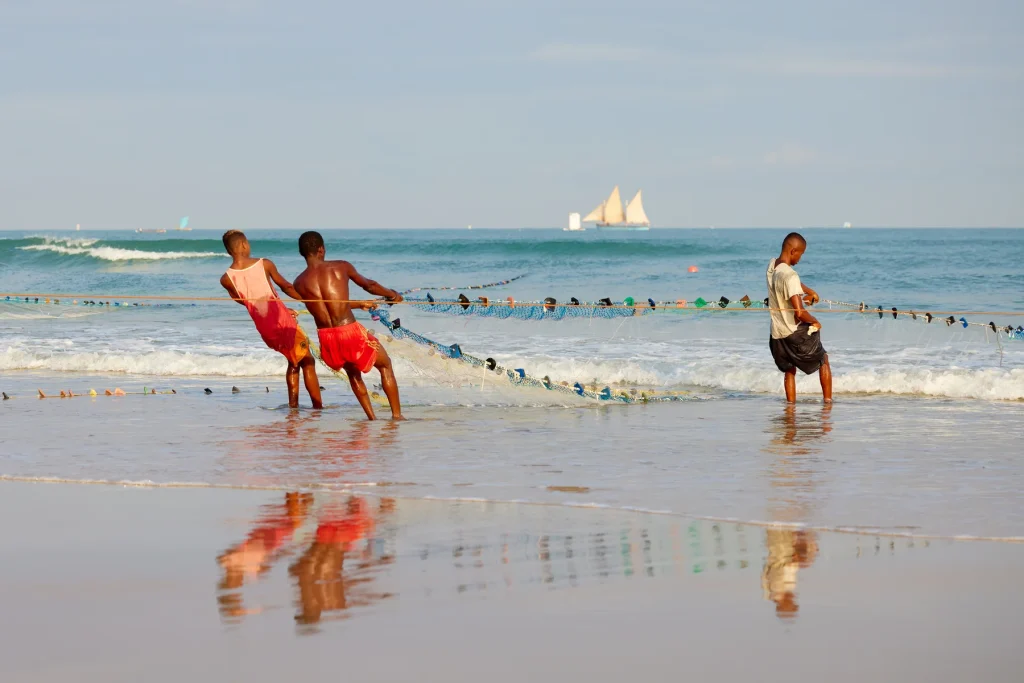

A visit to Morondava need not revolve around a single photograph. The town is a coastal setting in western Madagascar, and its shore gives a different sense of place from the famous trees inland. Looking at both allows you to plan a journey with more than one subject: a landscape, a town and the people using it.
Start with a place, not a checklist
Choose one part of the town to understand before connecting it to another. Ask your accommodation or a locally based guide to explain the setting around your base, including where a visitor can walk comfortably and where an introduction would be useful. A line on a map is a starting point for that conversation, not confirmation of a suitable route.
Keep ordinary activities ordinary. A working shore is not an arranged performance, and a boat on the sand is not automatically available for a visitor excursion. Leave clear space for people carrying equipment, moving boats or handling a catch. Ask before photographing an identifiable person or entering a space that is not obviously public.
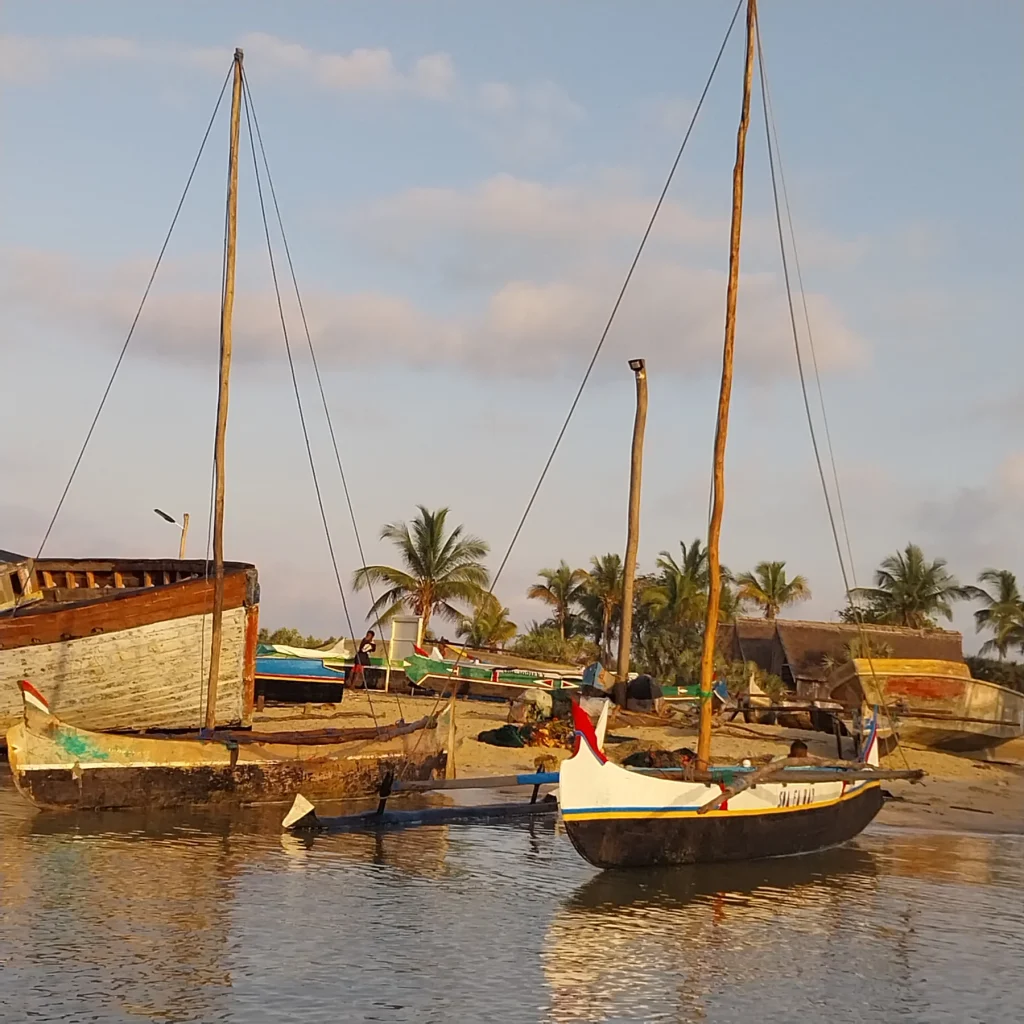

Read the waterfront carefully
The boats in a photograph can be compelling without telling you anything reliable about a service for sale. If you want a boat outing, ask who is arranging it, which vessel is intended, where it goes and what conditions determine whether it proceeds. Get the details from the person responsible for the actual trip. Do not infer an itinerary, equipment standard or permission from an attractive image.
Our photographs are dated records. They help describe the coastal setting, but they do not establish today’s tide, access, weather or business arrangements. Give a current local explanation more weight than the apparent simplicity of an older view.
Leave time between the main plans
A practical town day can have one agreed outing and space around it. You might use that space for a meal, a conversation about the next stage of travel or a short walk suggested by someone familiar with the area. There is no need to turn every interval into another paid activity.
- Confirm the exact meeting place using a name or landmark your host recognizes.
- Ask how you will return, including who to contact if the arrangement changes.
- Discuss photography before a visit involving homes, workshops or working crews.
- Keep a written note of the agreed inclusions and any additional charges.
Keep nearby places distinct
The wider Menabe coast includes places with their own names and circumstances. A mangrove visit associated with Kivalo or a journey to Belo-sur-Mer should be described as that specific outing, with its own route and arrangements. Neither name is a substitute for central Morondava. Use the mangrove guide to prepare questions and the base-planning guide to connect them to where you will sleep.